
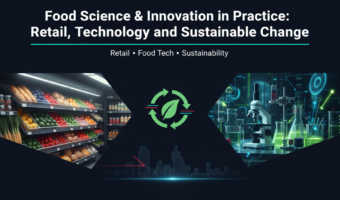
Food Science & Innovation in Practice: Retail, Technology, and Sustainable Change
About This Course
Program Overview
This course explores how innovation actually happens in the food industry, with a strong focus on food retail, technology, and sustainability. Moving beyond hygiene and safety fundamentals, learners will examine drivers of innovation, real-world challenges, and practical case studies that show how food systems evolve under pressure from consumers, regulation, cost, and climate impact.
The course takes a realistic view: innovation is not always shiny or radical — it is often incremental, constrained, and shaped by complex “wicked problems” such as food waste. Through applied examples, including a cold-chain case study and brewing technology, learners will develop the ability to analyse, evaluate, and propose innovation, not just describe it.
Core Learning Objectives
By the end of this course, you will be able to:
-
Explore different types of innovation and identify real-world examples.
-
Distinguish between incremental, radical, and disruptive innovation.
-
Analyse consumer needs that drive innovation in the food industry.
-
Reflect on a real cold chain innovation case study in food retail.
-
Identify key drivers and challenges shaping food retail innovation.
-
Explore how individuals, teams, and crowdsourcing contribute to innovation.
-
Assess the wicked problem of food waste and its complexity.
-
Propose and clearly summarise an innovative solution to food waste.
-
Research technical innovation in brewing and evaluate its impact.
-
Demonstrate understanding through a final assessment.
Detailed Course Structure (8 Modules)
Module 1: Understanding Innovation in the Food Industry
-
What innovation really means in food science
-
Types of innovation: product, process, business model, and social
-
Why food innovation is slower—and why that matters
Module 2: Levels of Innovation – Incremental, Radical, and Disruptive
-
Clear definitions with industry examples
-
Why incremental innovation dominates food retail
-
When radical or disruptive innovation succeeds—and when it fails
Module 3: Consumer Needs as Drivers of Food Innovation
-
Changing consumer expectations (health, sustainability, convenience)
-
Trust, transparency, and ethical sourcing
-
How consumer behaviour shapes innovation priorities
Module 4: Case Study – Cold Chain Innovation in Food Retail
-
Understanding the cold chain and why it matters
-
Innovation in logistics, monitoring, and temperature control
-
Case study analysis: the cold chain process at Marks & Spencer
-
Lessons for food quality, waste reduction, and safety
Module 5: Drivers and Challenges in Food Retail Innovation
-
Cost pressures, regulation, and supply chain complexity
-
Sustainability and climate impact
-
Technology adoption vs operational reality
-
Future directions for food retail innovation
Module 6: People, Collaboration, and Crowdsourcing
-
How individuals and teams contribute to innovation
-
The role of cross-functional collaboration
-
Crowdsourcing and open innovation in food systems
-
Real examples of collective problem-solving
Module 7: The Wicked Problem of Food Waste
-
What makes food waste a “wicked problem”
-
Economic, social, and environmental dimensions
-
Global vs local food waste challenges
-
Evaluating existing solutions and their limitations
Module 8: Innovation and Technology in the Brewing Process
-
Overview of traditional vs modern brewing
-
Technical innovations in fermentation, automation, and sustainability
-
Drivers and challenges specific to brewing innovation
-
Final assessment and reflective task
Expected Outcomes
After completing this course, you will:
-
Think critically about innovation rather than treating it as a buzzword.
-
Understand how innovation operates under real-world constraints.
-
Be able to analyse case studies and identify meaningful innovation drivers.
-
Confidently discuss food waste as a systems-level challenge.
-
Develop and communicate practical innovation ideas clearly and concisely.
-
Be prepared for further study or innovation-focused roles in food science and retail.
Who Is This Course For?
This course is ideal for:
-
Learners who have completed an introductory food safety or food science course
-
Food industry professionals seeking innovation awareness
-
Students interested in food retail, sustainability, or product development
-
Aspiring professionals in food technology, quality, or operations
-
Anyone looking to understand how food systems evolve in practice
Career Opportunities
This course supports progression toward roles such as:
-
Food Innovation Assistant
-
Food Product Development Coordinator
-
Food Retail Operations Analyst
-
Sustainability or Food Waste Project Assistant
-
Brewing or Beverage Operations Support Roles
-
Graduate-level roles in food science, technology, or retail innovation
Learning Objectives
Curriculum
Module 1: Understanding Innovation in the Food Industry
1. What Innovation Really Means in Food Science
2. Types of Innovation in the Food Industry
3. Why Food Innovation Is Slower—and Why That Matters
Module 2: Levels of Innovation – Incremental, Radical, and Disruptive
Module 3: Consumer Needs as Drivers of Food Innovation
Module 4: Case Study – Cold Chain Innovation in Food Retail
Module 5: Drivers and Challenges in Food Retail Innovation
Module 6: People, Collaboration, and Crowdsourcing
Module 7: The Wicked Problem of Food Waste
Module 8: Innovation and Technology in the Brewing Process
Quiz – Food Science & Innovation in Practice: Retail, Technology, and Sustainable Change


£ 599.00£ 699.00
Introduction to Food Science & Innovation
£ 599.00£ 699.00