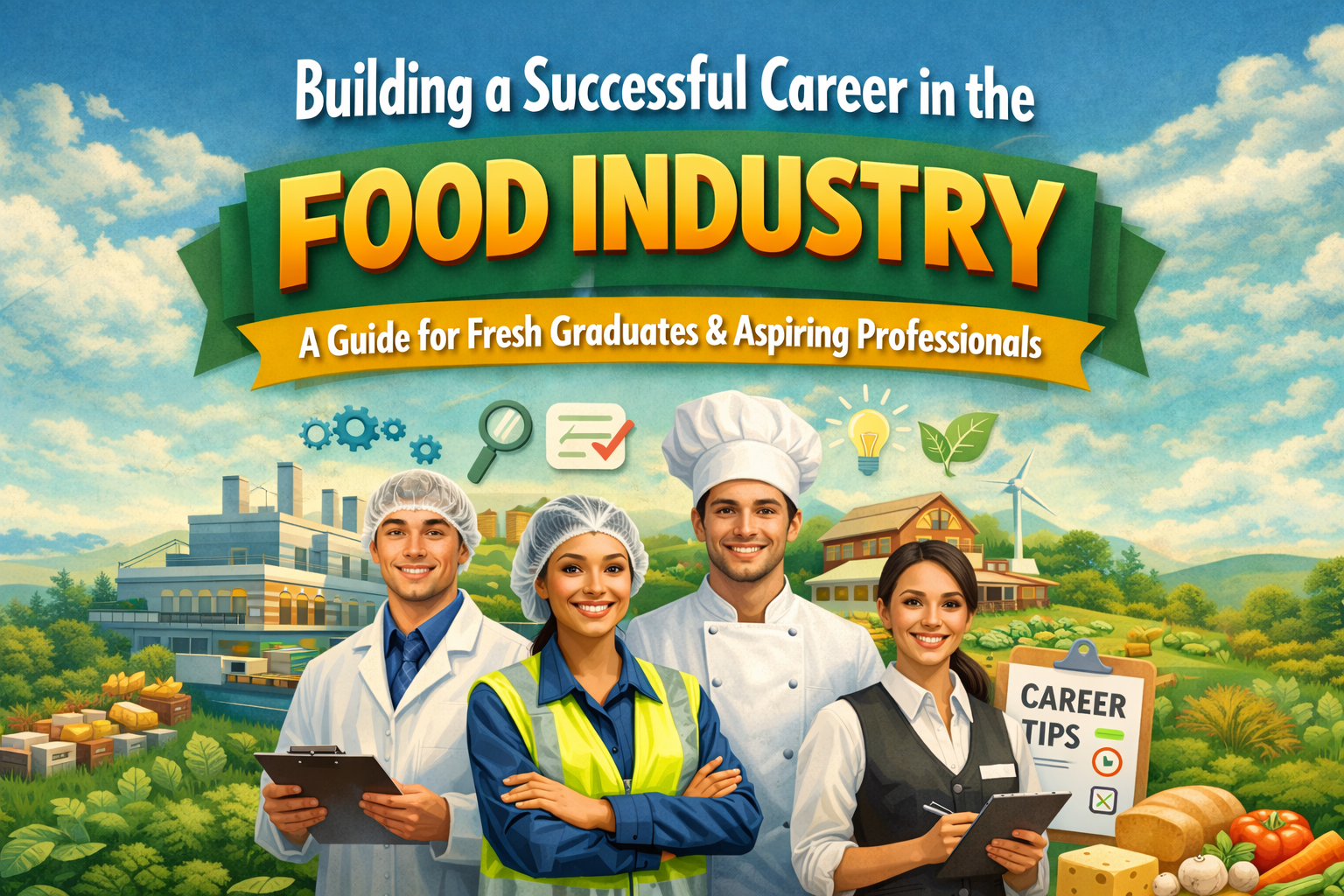
The food industry is one of the largest and most dynamic sectors in the UK economy. From food production and manufacturing to hospitality, food safety, quality control, and product development, the industry offers diverse and rewarding food industry careers for fresh graduates and aspiring professionals. Moreover, as consumer demands evolve and sustainability becomes a priority, the food sector continues to create new roles and long-term opportunities.
However, many graduates struggle to understand where they fit into the food industry or how to start their careers effectively. Therefore, this blog provides a clear, practical, and career-focused guide to help you navigate food industry jobs in the UK. Whether you are a recent graduate or someone planning to enter this field, this guide will help you build confidence, skills, and direction.
Read More: Personal Branding for Career Success: Build a Job-Ready Professional Identity
Understanding the UK Food Industry Landscape
The UK food industry is vast and interconnected. It includes food manufacturing, food processing, hospitality, catering, retail, logistics, quality assurance, research and development, and food safety management. As a result, professionals from various educational backgrounds can find suitable food industry careers.
Furthermore, the industry contributes billions to the UK economy and employs millions of people. Because of this scale, employers continuously seek skilled professionals who understand food quality, hygiene, compliance, customer service, and operational efficiency.
Importantly, technological advancements and sustainability initiatives now shape the industry. Therefore, graduates who combine technical knowledge with adaptability gain a competitive advantage in food industry jobs.
Why Choose Food Industry Careers as a Graduate?
Food industry careers offer stability, growth, and global relevance. Since food is a basic necessity, the sector remains resilient even during economic uncertainty. Additionally, the industry supports career mobility, allowing professionals to move across roles and specialisations.
For fresh graduates, the food industry provides:
-
Clear entry-level roles
-
Structured training programmes
-
Opportunities for skill development
-
Career progression across departments
-
Exposure to international standards and practices
Moreover, food industry careers allow you to make a tangible impact. You contribute to food safety, nutrition, sustainability, and consumer wellbeing, which adds purpose to your professional journey.
Entry-Level Food Industry Jobs for Fresh Graduates
Starting your career in the food industry does not require extensive experience. Instead, employers look for enthusiasm, basic technical understanding, and a willingness to learn. Common entry-level food industry jobs include:
Food Production Assistant
This role involves supporting production processes, maintaining hygiene standards, and ensuring efficiency on the production line. It offers practical exposure to food manufacturing operations.
Quality Control Assistant
Quality control roles focus on checking food safety standards, monitoring product quality, and supporting compliance with UK food regulations.
Food Safety or Hygiene Assistant
These positions suit graduates interested in compliance and regulatory frameworks. You help maintain hygiene practices and support food safety audits.
Hospitality and Catering Roles
Hospitality and food industry roles, such as kitchen supervisors, catering assistants, or restaurant managers, help you develop customer service and operational skills.
Graduate Trainee Programmes
Many UK food companies offer structured graduate schemes that rotate across departments. Consequently, you gain broad exposure and faster career progression.

Essential Skills for Food Industry Careers
To succeed in food industry careers, you must develop a mix of technical, operational, and soft skills. While qualifications matter, employers increasingly value practical competencies.
Technical and Industry Skills
-
Knowledge of food safety and hygiene standards (HACCP, FSA guidelines)
-
Understanding food production and manufacturing processes
-
Awareness of sustainability and waste management practices
-
Basic quality assurance and compliance knowledge
Transferable Skills
-
Communication and teamwork
-
Attention to detail
-
Time management and organisation
-
Problem-solving skills
-
Adaptability and resilience
Furthermore, strong communication skills help you work across teams, while attention to detail ensures compliance with strict food safety regulations.
Education and Qualifications That Support Food Industry Careers
Although you can enter the food industry with different academic backgrounds, certain qualifications strengthen your profile. Degrees in food science, nutrition, hospitality management, microbiology, business, or supply chain management align well with food industry jobs.
Additionally, short courses and certifications enhance employability. For example:
-
Food Safety Level 2 or 3
-
HACCP training
-
Allergen awareness certification
-
Health and safety training
These certifications demonstrate commitment and readiness, especially for fresh graduates seeking entry-level food industry roles.
Career Progression in the Food Industry
One of the strongest advantages of food industry careers is clear progression. With experience and continuous learning, professionals can move into specialised or leadership roles.
Typical career paths include:
-
Production Assistant → Production Supervisor → Operations Manager
-
Quality Assistant → Quality Manager → Compliance or Technical Manager
-
Hospitality Supervisor → Restaurant Manager → Operations Director
-
Graduate Trainee → Department Manager → Senior Leadership
Moreover, professionals can switch specialisations, such as moving from operations to quality or from hospitality to supply chain management.
The Role of Sustainability and Innovation
Sustainability now plays a central role in food industry careers. Companies focus on reducing waste, sourcing ethically, improving packaging, and lowering carbon footprints. As a result, employers value candidates who understand sustainability trends.
Similarly, innovation drives new opportunities. Automation, data analysis, and food technology create roles that combine traditional food knowledge with modern skills. Therefore, graduates who stay updated with industry trends remain competitive in the UK food industry job market.
How to Prepare for Food Industry Jobs in the UK
Preparation is key to securing food industry careers. First, research the sector and identify roles aligned with your interests. Next, tailor your CV to highlight relevant skills, certifications, and practical experience.
Additionally:
-
Gain internships or part-time experience in food-related roles
-
Attend industry workshops and networking events
-
Follow UK food industry news and regulations
-
Develop a professional LinkedIn profile
Importantly, present your experience clearly. Even academic projects, volunteer work, or hospitality roles demonstrate transferable skills relevant to food industry jobs.
CV and Personal Branding for Food Industry Careers
A strong CV significantly improves your chances in competitive food industry careers. You should focus on clarity, achievements, and industry relevance. Use keywords such as food safety, quality assurance, food production, and compliance to improve ATS compatibility.
Moreover, personal branding matters. Employers look for candidates who communicate professionalism, reliability, and awareness of food industry standards. Therefore, align your CV, cover letter, and online profiles with your career goals.
Read More: Growing Personal Branding Across Platforms in the UK
Challenges and How to Overcome Them
Like any industry, food careers come with challenges. These may include shift work, high-pressure environments, and strict compliance requirements. However, resilience and adaptability help you overcome these challenges.
Additionally, continuous learning ensures long-term growth. When you upgrade your skills and certifications, you stay relevant and open doors to advanced roles.
Final Thoughts
Food industry careers offer excellent opportunities for fresh graduates and aspiring professionals in the UK. With diverse roles, clear progression, and strong demand, the industry rewards those who prepare strategically and stay committed to growth.
Therefore, focus on building relevant skills, gaining practical exposure, and presenting yourself professionally. When you combine knowledge, adaptability, and the right mindset, you position yourself for long-term success in the food industry.
Get your CV checked and improve it with section based detailed recommendation, for free: Brand Me 4 Job Free CV Check!
Joinwww.stunited.org to build a wide network in the United Kingdom.
Contact us to get Career Assistance in the UK: Call Us Now!
To get regular job, career, and industry updates along with important UK jobs-related information, follow us on: Instagram, LinkedIn & Facebook