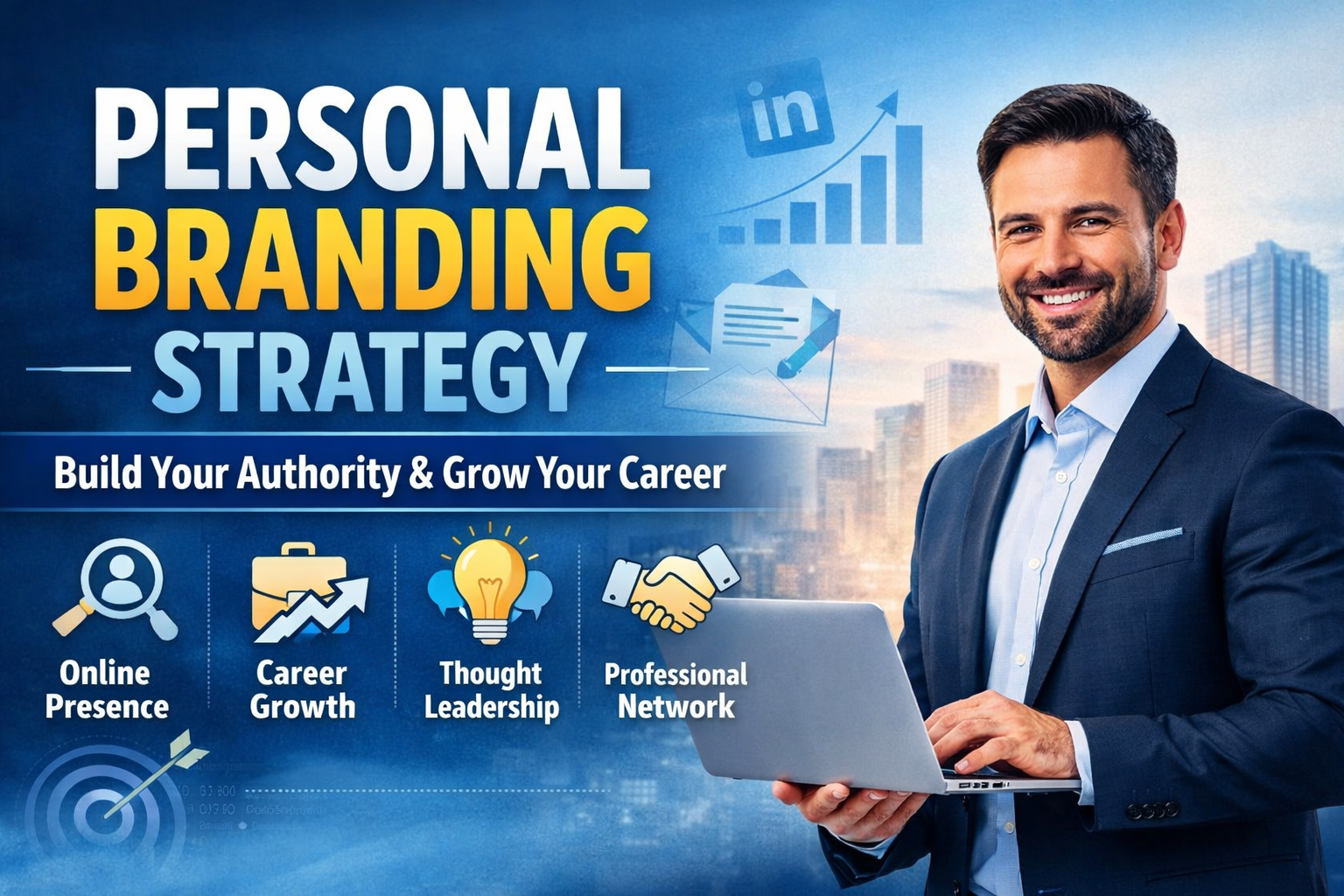
A strong Personal Branding Strategy is no longer optional in today’s competitive job market. Instead, it is essential for building credibility, authority, and long-term career growth. While qualifications and experience remain important, they do not automatically guarantee visibility; therefore, professionals must intentionally shape how they are perceived.
Personal Branding allows you to define your professional identity and communicate it clearly across platforms. However, without a structured Strategy, your efforts may appear inconsistent or ineffective.
This comprehensive guide explains how to create and implement a powerful Personal Branding Strategy that enhances your professional reputation, strengthens your online presence, and accelerates career growth.
Read More: Starting a Career in the Food Industry: A Complete Guide In 2026
What Is a Personal Branding Strategy?
A Personal Branding Strategy is a structured plan that defines how you present your expertise, values, and achievements to your target audience. While Personal Branding focuses on perception, the Strategy ensures that perception is intentional and consistent.
It includes:
-
Clear professional positioning
-
Defined target audience
-
Consistent online presence
-
Strategic LinkedIn branding
-
Thought leadership content
-
A strong networking strategy
Without a Personal Branding Strategy, professionals often send mixed signals. As a result, recruiters and industry peers may struggle to understand their value.
Why a Personal Branding Strategy Is Essential Today
1. Increased Competition in the Job Market
The global workforce has expanded significantly. Consequently, job market visibility requires more than submitting applications. A well-defined Personal Branding Strategy differentiates you from equally qualified candidates.
Recruiters frequently review LinkedIn branding before shortlisting applicants; therefore, a strong digital footprint directly impacts opportunities.
2. Digital First Impressions 🌐
Today, first impressions occur online; thus, employers, clients, and collaborators evaluate your online presence before initiating contact.
If your profiles lack clarity or consistency, your professional reputation weakens; however, when your Personal Branding Strategy aligns your CV positioning with your online messaging, credibility increases immediately.
3. Career Growth and Authority 🎯
A strategic approach to Personal Branding positions you as a subject-matter expert; as a result, this visibility supports promotions, leadership roles, and collaboration requests. Over time, this visibility supports promotions, leadership roles, speaking opportunities, and collaboration requests.
Therefore, a Personal Branding Strategy becomes a long-term investment rather than a short-term tactic.
Core Elements of an Effective Personal Branding Strategy
1. Clear Professional Positioning
Every successful Personal Branding Strategy begins with clarity and You must define:
-
Your area of expertise
-
The problems you solve
-
Your target industry
-
Your unique value proposition
For example, instead of saying “Finance professional,” position yourself as:
“Financial analyst specialising in cost optimisation and regulatory compliance for SMEs.”
Clarity strengthens professional reputation and improves job market visibility.
2. Optimised LinkedIn Branding 💼
LinkedIn plays a central role in any Personal Branding Strategy. Therefore, optimise it carefully:
-
Use keyword-rich headlines.
-
Write a compelling summary in active voice.
-
Highlight measurable achievements.
-
Add certifications and professional projects.
-
Request recommendations.
Additionally, consistent engagement reinforces authority. Commenting on industry trends and sharing insights supports thought leadership.
3. Consistent Online Presence
Consistency ensures credibility; therefore, your Personal Branding Strategy must align your LinkedIn profile, CV positioning, and other professional platforms.
Your Strategy must align:
-
LinkedIn profile
-
CV positioning
-
Personal website or portfolio
-
Professional social platforms
If your CV emphasises leadership skills but your online presence lacks supporting evidence, trust decreases. Therefore, alignment across all channels is essential.
4. Thought Leadership and Content Creation ✍️
A powerful Personal Branding Strategy includes content development. Rather than simply claiming expertise, demonstrate it.
You can:
-
Publish industry blogs
-
Share research insights
-
Post professional commentary
-
Create educational videos
-
Offer case studies
For instance, HR professionals can discuss recruitment trends. Marketing professionals can explain campaign strategies. Finance experts can analyse regulatory updates.
Over time, consistent value builds employer branding strength and authority.
5. Strategic Networking 🤝
Networking complements your Personal Branding Strategy. However, it must be intentional.
An effective networking strategy involves:
-
Engaging with industry leaders
-
Joining professional groups
-
Attending webinars and conferences
-
Following up with meaningful conversations
When professionals associate your name with expertise and reliability, opportunities expand organically.

Step-by-Step Guide to Building Your Personal Branding Strategy
Step 1: Conduct a Brand Audit
Begin your Personal Branding Strategy by reviewing your current digital footprint:
-
Search your name online.
-
Analyse LinkedIn branding.
-
Review CV positioning.
-
Check professional social profiles.
Identify inconsistencies, outdated achievements, or unclear messaging.
Step 2: Define Your Brand Statement
Create a concise statement that anchors your Personal Branding Strategy.
For example:
“I help organisations improve operational efficiency through data-driven financial analysis.”
Use this statement consistently across your online presence and professional documents.
Step 3: Strengthen Your CV Positioning
Your CV must reflect your Personal Branding Strategy.
Instead of listing responsibilities, highlight measurable results; consequently, your CV positioning becomes more impactful.
❌ Managed client accounts
✅ Increased client retention by 20% through structured relationship management
Strong CV positioning enhances credibility and aligns with LinkedIn branding.
Step 4: Build a Content Plan
Consistency supports authority. Therefore, integrate content creation into your Personal Branding Strategy:
-
Weekly short insights
-
Monthly long-form posts
-
Industry trend commentary
-
Professional updates
This strengthens job market visibility and reinforces thought leadership.
Common Mistakes in a Personal Branding Strategy
1. Inconsistency Across Platforms
Misaligned job titles or achievements weaken professional reputation.
2. Lack of Focus
Attempting to target multiple industries dilutes your Personal Branding Strategy.
3. Overemphasis on Self-Promotion
Effective Personal Branding provides value. Therefore, focus on educating and informing rather than boasting.
4. Ignoring Offline Reputation
Professional conduct, communication style, and reliability also influence your brand.
Read More: UK Professionals: Building Authority Through Personal Branding
Conclusion
A well-executed Personal Branding transforms how professionals are perceived in competitive markets. Rather than leaving reputation to chance, you actively shape it through clarity, consistency, and value-driven communication.
By aligning LinkedIn branding, CV positioning, thought leadership, and networking strategy, you build sustainable authority. Over time, this authority enhances career growth, strengthens professional reputation, and improves job market visibility.
Start defining your Personal Branding Strategy today. With deliberate action and consistent effort, your name can become synonymous with expertise and credibility in your industry.
Get your CV checked and improve it with section based detailed recommendation, for free: Brand Me 4 Job Free CV Check!
Join www.stunited.org to build a wide network in the United Kingdom.
Contact us to get Career Assistance in the UK: Call Us Now!
To get regular job, career, and industry updates along with important UK jobs-related information, follow us on: Instagram, LinkedIn & Facebook