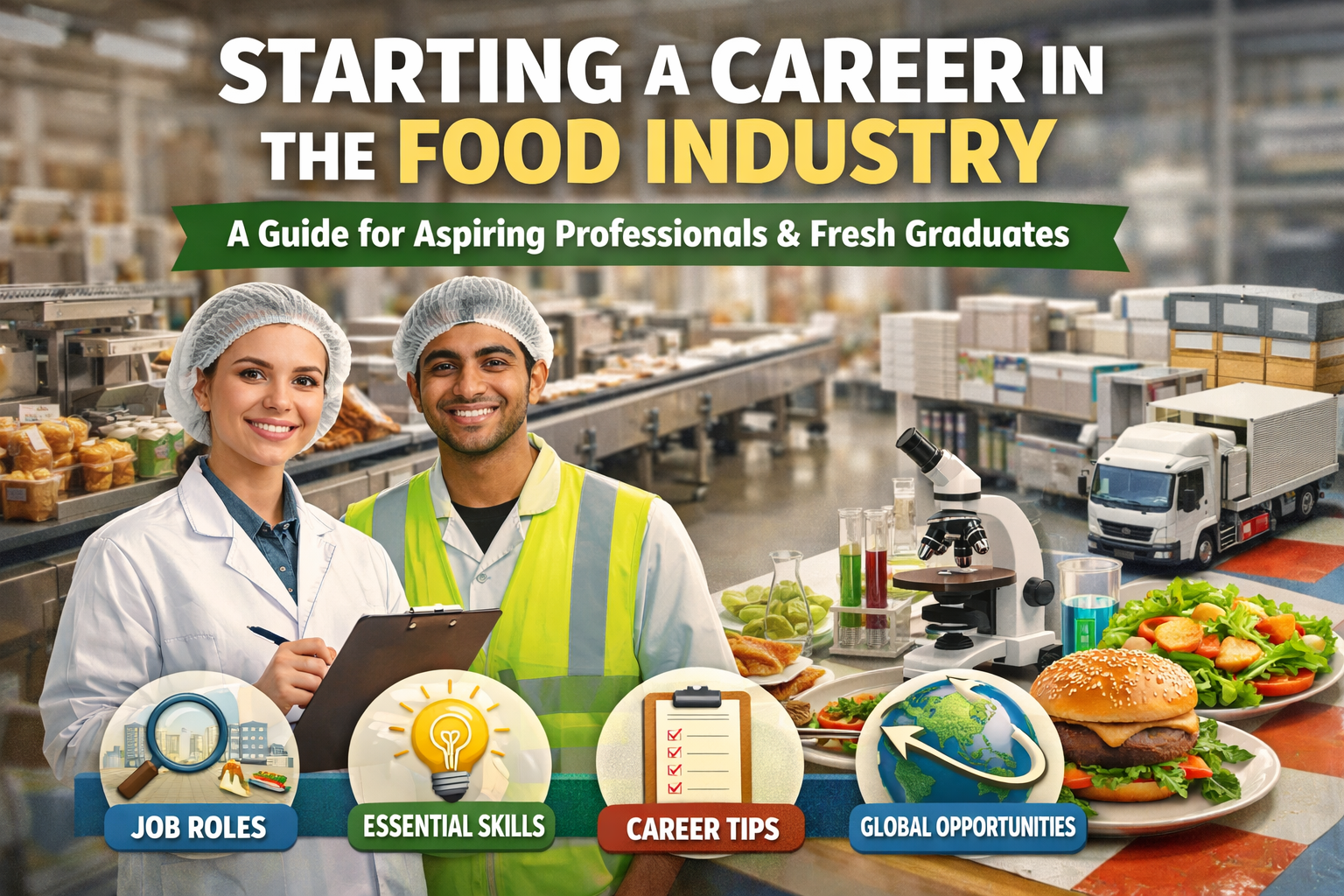
The food industry remains one of the most stable and fast-growing sectors worldwide. In the UK, it continues to create thousands of opportunities across manufacturing, quality assurance, research, supply chain, and management. As a result, food industry careers have become increasingly attractive for aspiring professionals and fresh graduates looking for long-term growth, job security, and global exposure.
However, many graduates struggle to understand where to start, what skills employers value, and how to stand out in a competitive job market. Therefore, this guide explains the food industry landscape, career paths, essential skills, and practical steps to help you launch a successful career with confidence.
Read More: Personal Branding for Career Growth: Build Authority, Visibility and Long-Term Success
Understanding the Food Industry Landscape
The food industry covers much more than food production alone. It includes every stage of the journey, from raw material sourcing to manufacturing, quality control, packaging, distribution, and retail. Consequently, this diversity creates opportunities for graduates from food science, food technology, nutrition, microbiology, chemistry, engineering, business, and management backgrounds.
Moreover, the UK food sector plays a vital role in the national economy. With strict safety regulations and high consumer expectations, employers actively seek skilled professionals who can maintain quality, compliance, and efficiency.
Why Choose a Career in the Food Industry?
Choosing a career path can feel overwhelming, especially at the beginning. However, the food industry offers several clear advantages.
Firstly, it provides strong job stability. People will always need safe and high-quality food, regardless of economic changes. Secondly, it offers global career opportunities, as food standards and skills remain transferable across countries. Additionally, the industry supports career progression, allowing professionals to move from technical roles into leadership and management positions.
Most importantly, food industry careers allow you to make a real-world impact by improving food safety, sustainability, and public health.
Popular Food Industry Career Paths for Fresh Graduates
Understanding different job roles helps you make informed career decisions. Below are some of the most common and rewarding entry-level and early-career paths.
Food Quality Assurance and Food Safety Roles
Quality assurance remains one of the most in-demand areas in the food industry. Professionals in this field ensure products meet safety standards, legal regulations, and company specifications.
Typical responsibilities include:
-
Conducting quality checks and inspections
-
Monitoring hygiene and safety procedures
-
Maintaining documentation and audit records
-
Supporting compliance with food safety standards
This path suits graduates who enjoy detail-oriented work and structured processes.
Food Production and Manufacturing Roles
Food manufacturing roles focus on large-scale production and operational efficiency. Graduates often start as production trainees or junior supervisors.
Key responsibilities include:
-
Monitoring production lines
-
Ensuring product consistency
-
Reducing waste and downtime
-
Supporting continuous improvement initiatives
Over time, professionals can progress into production management or operations leadership roles.
Food Research and Development (R&D)
If you enjoy innovation, research, and product creation, food R&D offers exciting opportunities. These roles involve developing new products, improving existing recipes, and responding to market trends.
Graduates working in R&D typically:
-
Conduct product trials and testing
-
Analyse ingredients and formulations
-
Support product launches
-
Collaborate with marketing and technical teams
This career path suits creative thinkers with strong scientific knowledge.
Food Supply Chain and Operations
The supply chain ensures food products move efficiently from suppliers to consumers. Entry-level roles include planning assistants, procurement coordinators, and logistics executives.
Responsibilities often include:
-
Managing inventory levels
-
Coordinating suppliers and distributors
-
Reducing delivery delays
-
Supporting cost-effective operations
Strong organisational and analytical skills are essential in this field.
Regulatory Affairs and Compliance
Regulatory professionals ensure food products meet national and international laws. Although this field may appear complex, it offers excellent long-term growth.
Graduates assist with:
-
Regulatory documentation
-
Product labelling compliance
-
Legal updates and risk assessment
-
Internal audits and inspections
This path suits candidates who prefer policy-driven and analytical roles.

Essential Skills for Food Industry Careers
While academic qualifications matter, employers increasingly prioritise practical skills. Therefore, building the right skill set significantly improves employability.
Technical and Industry Knowledge
Graduates must understand:
-
Food safety principles
-
Hygiene standards
-
Quality management systems
-
Manufacturing processes
Even basic industry knowledge demonstrates readiness for professional roles.
Communication and Teamwork
The food industry relies heavily on cross-functional collaboration. Clear communication ensures safety, efficiency, and compliance. As a result, employers value candidates who can explain issues clearly and work well in teams.
Attention to Detail
Small mistakes can lead to safety risks or financial losses. Therefore, attention to detail remains a critical skill, especially in quality, compliance, and production roles.
Problem-Solving and Adaptability
Food production environments change quickly. Professionals must respond to issues calmly, analyse root causes, and implement solutions efficiently.
Digital and Documentation Skills
Modern food businesses use digital systems for reporting, audits, and tracking. Familiarity with spreadsheets, reporting tools, and documentation systems provides a strong advantage.
How Fresh Graduates Can Enter the Food Industry
Breaking into the food industry requires a strategic approach. Simply applying for jobs rarely delivers results. Instead, candidates should follow a structured plan.
Gain Practical Exposure Early
Internships, placements, training programmes, and short courses significantly improve employability. They demonstrate real-world understanding and reduce the skills gap between education and industry.
Tailor Your CV for Food Industry Jobs
A generic CV rarely works. Instead, highlight:
-
Relevant modules and coursework
-
Industry projects and training
-
Food safety certifications
-
Practical skills and technical knowledge
Employers prefer candidates who clearly align with food industry requirements.
Build Industry-Relevant Certifications
Short courses in food safety, hygiene, quality systems, and auditing strengthen your profile. These certifications show initiative and commitment to the industry.
Apply Strategically and Consistently
Focus on entry-level and trainee roles rather than senior positions. Additionally, track applications, customise cover letters, and follow up professionally.
Develop a Long-Term Career Plan
While your first role matters, your long-term growth matters more. Set clear goals, identify skill gaps, and continuously upskill to progress faster.
Read More: UK Professionals: Building Authority Through Personal Branding
Challenges Fresh Graduates Face in the Food Industry
Despite strong demand, graduates often face challenges such as lack of experience, unclear job expectations, and limited industry exposure. However, these challenges remain manageable with preparation.
By building practical skills, gaining training, and positioning yourself correctly, you can overcome entry-level barriers and secure your first role.
Future Trends in Food Industry Careers
The food industry continues to evolve. As a result, professionals must stay updated with emerging trends.
Key trends include:
-
Increased focus on food safety and traceability
-
Growth in sustainable and ethical food production
-
Automation and smart manufacturing
-
Demand for data-driven decision-making
Graduates who adapt to these trends gain a competitive advantage.
Final Thoughts: Building a Successful Career in the Food Industry
Starting a career in the food industry offers stability, global opportunities, and meaningful professional growth. Although fresh graduates may face initial challenges, the right strategy, skills, and mindset can unlock long-term success.
By understanding food industry careers, choosing suitable roles, building essential skills, and gaining practical exposure, aspiring professionals can confidently enter this dynamic sector. Most importantly, continuous learning and adaptability will ensure sustained career growth in an ever-evolving industry.
Get your CV checked and improve it with section based detailed recommendation, for free: Brand Me 4 Job Free CV Check!
Joinwww.stunited.org to build a wide network in the United Kingdom.
Contact us to get Career Assistance in the UK: Call Us Now!
To get regular job, career, and industry updates along with important UK jobs-related information, follow us on: Instagram, LinkedIn & Facebook