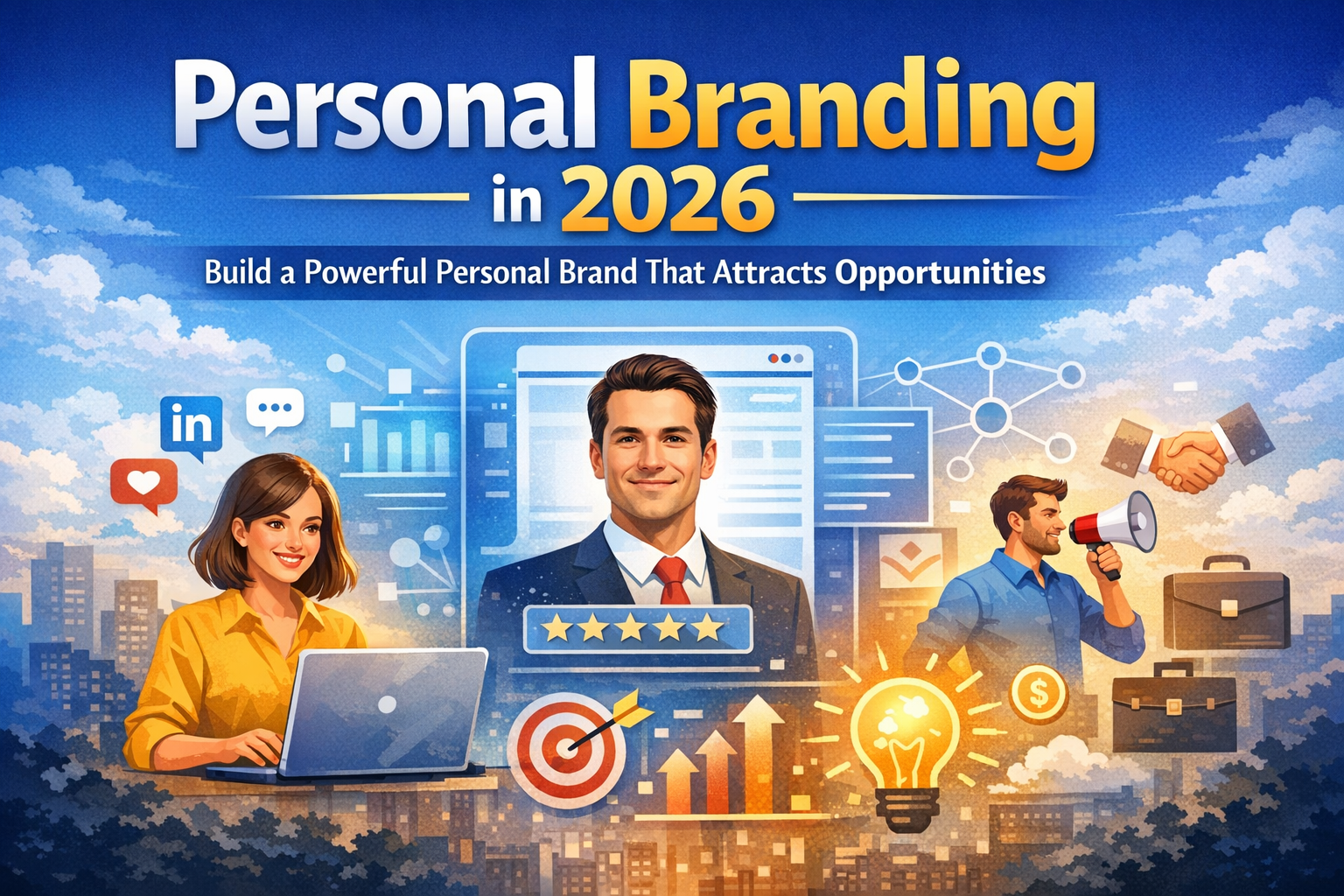
In today’s competitive digital economy, skills alone are no longer enough to stand out. What truly differentiates professionals, entrepreneurs, job seekers, and creators is Personal Branding — the intentional process of shaping how the world perceives you.
Whether you are a student, marketer, administrator, recruiter, freelancer, or business professional, Personal Branding helps you establish credibility, trust, and visibility in your field. It allows people to understand who you are, what you stand for, and why they should choose you.
This blog explains what Personal Branding is, why it matters in 2026, and how you can build a strong, authentic, and future-ready personal brand.
Read More: Why Administrative Skills Are the Secret Weapon for Aspiring Marketers in 2026
What Is Personal Branding?
Personal Branding is the strategic practice of presenting your skills, values, personality, and expertise consistently across all platforms — online and offline.
It is not self-promotion. Instead, it is reputation management. It is about controlling your narrative instead of letting others define it for you.
Your Personal Branding includes:
-
Your digital presence (LinkedIn, portfolio, website, social media)
-
Your communication style
-
Your professional behaviour
-
Your expertise and content
-
Your values and personality
Together, these elements shape how people remember and trust you.
Why Personal Branding in 2026 Is Essential
The professional world is more competitive, remote, and digital than ever before. Recruiters, clients, and collaborators often meet your online profile before meeting you.
Here is why Personal Branding is no longer optional:
1. It Builds Trust Before Interaction
A strong Personal Branding presence makes people feel confident about you even before the first conversation.
2. It Attracts the Right Opportunities
Instead of chasing jobs, clients, or partnerships, Personal Branding helps the right opportunities come to you.
3. It Differentiates You in Crowded Markets
When many people have similar skills, your story, values, and voice make you unique.
4. It Supports Long-Term Career Growth
Skills change, industries evolve, but your Personal Branding remains your long-term professional asset.
The Core Pillars of Personal Branding
To build effective Personal Branding, focus on these five pillars:
1. Clarity
You must be clear about:
-
Who you help
-
What problem do you solve
-
What makes you different
Without clarity, Personal Branding becomes confusing and inconsistent.
2. Consistency
Consistency builds recognition and trust. Your message, tone, visuals, and positioning should align across platforms.
Inconsistent Personal Branding weakens credibility and confuses your audience.
3. Credibility
Your Personal Branding must be supported by:
-
Skills
-
Experience
-
Results
-
Testimonials
-
Case studies
-
Certifications
This proof transforms perception into trust.
4. Communication
How you speak, write, and present yourself defines your brand personality.
Strong Personal Branding uses simple, confident, and value-driven communication.
5. Authenticity
The most powerful Personal Branding is authentic. You do not need to copy others. People trust real stories, not perfect images.

Step-by-Step Guide to Building Personal Branding in 2026
Step 1: Define Your Brand Identity
Ask yourself:
-
What am I known for?
-
What do I want to be known for?
-
Who is my target audience?
-
What value do I offer?
Your answers shape your Personal Branding foundation.
Step 2: Optimise Your Digital Presence
Your online platforms are your digital storefront.
Focus on:
-
A strong LinkedIn headline and summary
-
A professional profile photo
-
A clear bio describing your expertise
-
Highlighted achievements and projects
All elements must support your Personal Branding message.
Step 3: Create Valuable Content
Content builds authority.
Share:
-
Insights from your industry
-
Educational tips
-
Personal experiences and lessons
-
Case studies or results
Content strengthens Personal Branding by showing expertise rather than claiming it.
Step 4: Build Relationships
Comment, engage, collaborate, and support others. Personal Branding grows faster through meaningful connections.
People remember how you make them feel, not just what you know.
Step 5: Monitor and Refine
Track what works:
-
Profile views
-
Engagement
-
Inbound messages
-
Opportunities received
Refine your Personal Branding based on feedback and results.
Read More: Personal Branding for Professionals: How to Position Yourself for Long-Term Success
Common Personal Branding Mistakes to Avoid
-
Being inconsistent across platforms
-
Trying to appeal to everyone
-
Copying influencers instead of building your own voice
-
Ignoring storytelling
-
Over-selling instead of providing value
Avoiding these mistakes strengthens your Personal Branding and long-term credibility.
The Future of Personal Branding in 2026
In the future, Personal Branding will become even more important because:
-
AI will automate skills, but not human trust.
-
Remote work will increase global competition.
-
Digital first impressions will dominate hiring and business decisions.
Your Personal Branding will act as your digital reputation, your professional identity, and your opportunity magnet.
Conclusion
Personal Branding is not about fame. It is about clarity, trust, and impact. It helps you communicate your value, connect with the right people, and grow in a meaningful and sustainable way.
By investing in Personal Branding today, you invest in your future relevance, visibility, and success.
Start shaping your narrative — before someone else does.
Get your CV checked and improve it with section based detailed recommendation, for free: Brand Me 4 Job Free CV Check!
Join www.stunited.org to build a wide network in the United Kingdom.
Contact us to get Career Assistance in the UK: Call Us Now!
To get regular job, career, and industry updates along with important UK jobs-related information, follow us on: Instagram, LinkedIn & Facebook