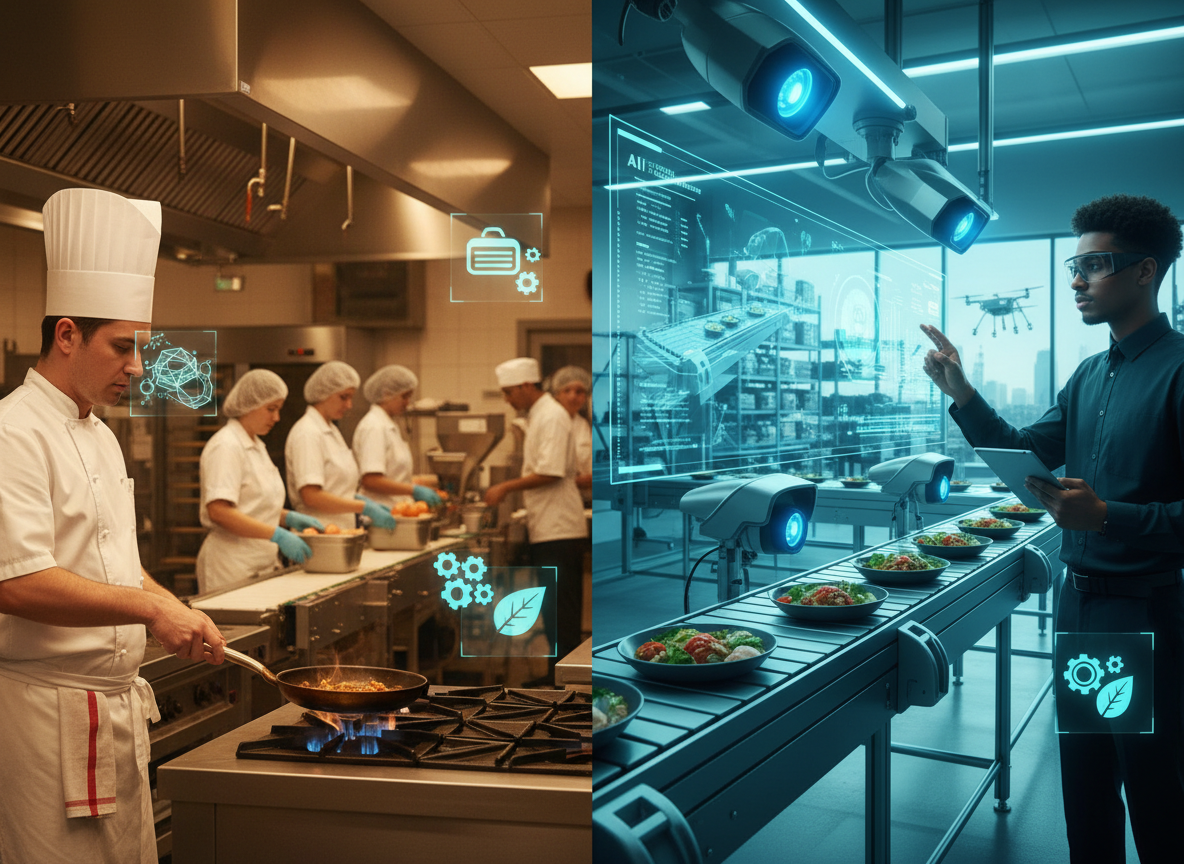
The UK food sector is undergoing one of its biggest transformations in decades. From AI-powered quality control to automated production lines and sustainable food innovation, technology is reshaping not only how food is produced but also the types of careers available.
For UK students, graduates, and aspiring professionals, understanding how digital transformation is influencing the sector is no longer optional, it is essential. Traditional food manufacturing roles are evolving, and new technology-driven careers are emerging at pace.
Real-time UK food industry technology trends:
Between 2025 and 2026, the UK food industry is investing heavily in automation, artificial intelligence, robotics, and sustainability-driven innovation. Food manufacturers are adopting smart factory systems that monitor performance in real time, reduce waste, and improve traceability.
Automation is becoming standard in large-scale food production facilities. Robotics are handling repetitive tasks such as sorting, packaging, and palletising. At the same time, AI systems are being used to predict equipment failures and maintain quality standards.
Sustainable food technology is another major trend. Companies are focusing on plant-based innovation, carbon footprint reduction, and alternative protein production. Digital traceability systems are also growing, enabling businesses to track ingredients from farm to fork using blockchain and data analytics tools.
For students exploring careers in food science and food technology, these trends highlight one key message: the industry is becoming increasingly digital.
New technology-driven job roles emerging in the UK food industry:
As technology reshapes the sector, new roles are emerging that did not exist a decade ago. UK employers are now recruiting professionals who combine food knowledge with technical expertise.
Some of the fastest-growing roles include:
-
Food Data Analyst – analysing production and quality data to improve efficiency.
-
Automation Specialist – managing robotic systems and smart production equipment.
-
Food AI Technologist – implementing AI tools in product development and quality monitoring.
-
Sustainability Manager – overseeing environmental impact and regulatory compliance.
-
Digital Supply Chain Analyst – using data to optimise logistics and traceability.
These roles sit at the intersection of food science and digital innovation. They require a blend of technical competence and industry knowledge, creating strong opportunities for graduates who are willing to upskill.
How automation and robotics are reshaping production and factory careers:
Automation has changed the landscape of food manufacturing. Traditional manual roles are gradually decreasing, particularly in repetitive production-line tasks. However, this does not mean fewer opportunities overall. Instead, the nature of roles is shifting.
Smart factories now require technicians who can operate, monitor, and troubleshoot automated systems. Supervisory roles increasingly involve overseeing digital dashboards rather than manual processes.
For example, a production technologist today may spend more time analysing machine performance data than physically managing equipment. Robotics require maintenance engineers and automation controllers, creating demand for hybrid technical-food roles.
This shift benefits graduates who combine food science with engineering awareness or digital literacy.
Impact of AI and data analytics on food safety and quality assurance roles:
Food safety remains a top priority in the UK, and technology is strengthening compliance processes. AI and data analytics tools are now used to detect patterns that human inspection might miss.
Predictive quality control systems analyse temperature logs, contamination risks, and supply chain data to prevent issues before they occur. Digital HACCP systems are replacing paper-based monitoring, enabling real-time compliance tracking.
Quality assurance professionals are increasingly expected to understand data dashboards, digital reporting systems, and compliance software. This evolution makes analytical skills just as important as regulatory knowledge.
For students entering food safety careers, developing digital competence can significantly improve employability.
Technology in product development and food innovation:
Product development has become one of the most exciting areas influenced by technology. UK companies are investing in plant-based products, alternative proteins, and functional foods supported by research data.
Rapid prototyping tools and R&D software now allow food technologists to simulate formulations before large-scale production. Lab-grown ingredients and precision fermentation are also gaining attention.
Technology accelerates innovation cycles. Instead of months of trial and error, digital modelling tools allow teams to test variations quickly.
This environment creates opportunities for graduates interested in research and development, especially those with knowledge of food chemistry, biotechnology, and digital modelling tools.
Digital transformation in supply chain and logistics careers:
The food supply chain is becoming increasingly digital. Blockchain traceability systems allow companies to verify the origin of ingredients instantly. Real-time inventory tracking reduces waste and improves distribution efficiency.
Sustainability tracking tools monitor carbon emissions and environmental impact across supply chains. Logistics managers are now expected to interpret data insights rather than simply coordinate shipments.
Careers in food logistics and supply chain management now require analytical thinking and familiarity with digital platforms. Graduates who understand both operations and data systems are particularly valuable.
Read more: How to Build a Portfolio for Food Industry Marketing Roles
Skills UK graduates need to stay competitive in tech-driven food careers:
To succeed in modern food industry technology careers, UK graduates need more than a traditional food science degree. Digital literacy is becoming fundamental.
Key skills include:
-
Data analysis and interpretation
-
Understanding automation systems
-
Familiarity with compliance software
-
Basic coding or data visualisation knowledge
-
Sustainability awareness
-
Problem-solving and adaptability
Soft skills remain equally important. Communication, teamwork, and the ability to work in multidisciplinary teams are essential in tech-integrated environments.
Graduates who combine scientific knowledge with digital awareness are well positioned for long-term career growth.
How food science and food technology degrees are evolving in the UK:
UK universities are adapting their programmes to reflect industry transformation. Many food science and food technology courses now include modules on automation, sustainability, and digital quality management systems.
Industry placements and partnerships are becoming more technology-focused. Students may gain exposure to smart manufacturing environments, data-driven R&D, and sustainability audits during placements.
Digital lab training and software simulation tools are increasingly incorporated into academic programmes, ensuring students graduate with relevant technical exposure.
This evolution ensures that degrees remain aligned with industry needs and future food careers.
Salary trends and career progression in tech-focused food roles:
Technology-enhanced roles often command higher salaries than traditional production roles. Entry-level positions such as quality assurance officers may start at competitive graduate salaries, but roles involving automation or data analysis often offer stronger progression pathways.
Food Data Analysts, Automation Specialists, and Sustainability Managers typically experience faster salary growth due to their specialised skills.
Long-term career progression in technology-driven roles can lead to leadership positions such as Operations Manager, Head of Innovation, or Technical Director.
For graduates considering long-term stability and earning potential, technology-integrated roles provide significant advantages.
Read more: Food Industry Careers in the UK | A Complete Guide for Fresh Graduates
Practical steps for students and fresh graduates to prepare for future food careers:
Preparing for the future of the food industry requires proactive effort. Students can take several practical steps:
-
Gain internships in technology-enabled manufacturing environments
-
Complete certifications in HACCP and digital compliance systems
-
Learn basic data analysis tools such as Excel, Power BI, or similar software
-
Attend industry networking events and career fairs
-
Build a CV that highlights technical and digital competencies
Staying informed about food industry technology trends and continuously developing skills ensures long-term career resilience.
Final Thoughts:
Technology is not replacing careers in the UK food industry – it is transforming them. Automation, AI, and digital systems are creating new opportunities while reshaping traditional roles.
For aspiring professionals, UK graduates, and students, the key to success lies in adaptability. Combining food science knowledge with digital awareness, analytical thinking, and sustainability insight will define the next generation of industry leaders.
The future of food is smart, data-driven, and innovative. Those who prepare now will be best positioned to thrive.
Get your CV checked and improve it with section based detailed recommendation, for free: Brand Me 4 Job Free CV Check!
Joinwww.stunited.org to build a wide network in the United Kingdom.
Contact us to get Career Assistance in the UK: Call Us Now!
To get regular job, career, and industry updates along with important UK jobs-related information, follow us on: Instagram, LinkedIn & Facebook
#FoodIndustryCareers #FoodTechUK #UKFoodIndustry #FoodScienceCareers #FoodTechnologyJobs #SmartManufacturing #AutomationInFood #AIInFood #FoodInnovation #UKCareers
#FoodData #DigitalTransformation #SustainableFood #FoodManufacturingUK #FutureOfFood #GraduateCareersUK #FoodIndustryJobs #TechInFood #FoodEngineering
#FoodSupplyChain #HACCP #QualityAssurance #FoodRAndD #UKGraduates #STEMCareersUK #FoodSectorUK #CareerGrowth #Industry40 #FoodAutomation #NextGenCareers